The Final Chapter: Karuizawa's Last Casks Sell for $5.65M at Christie's
Mar 10, 2026
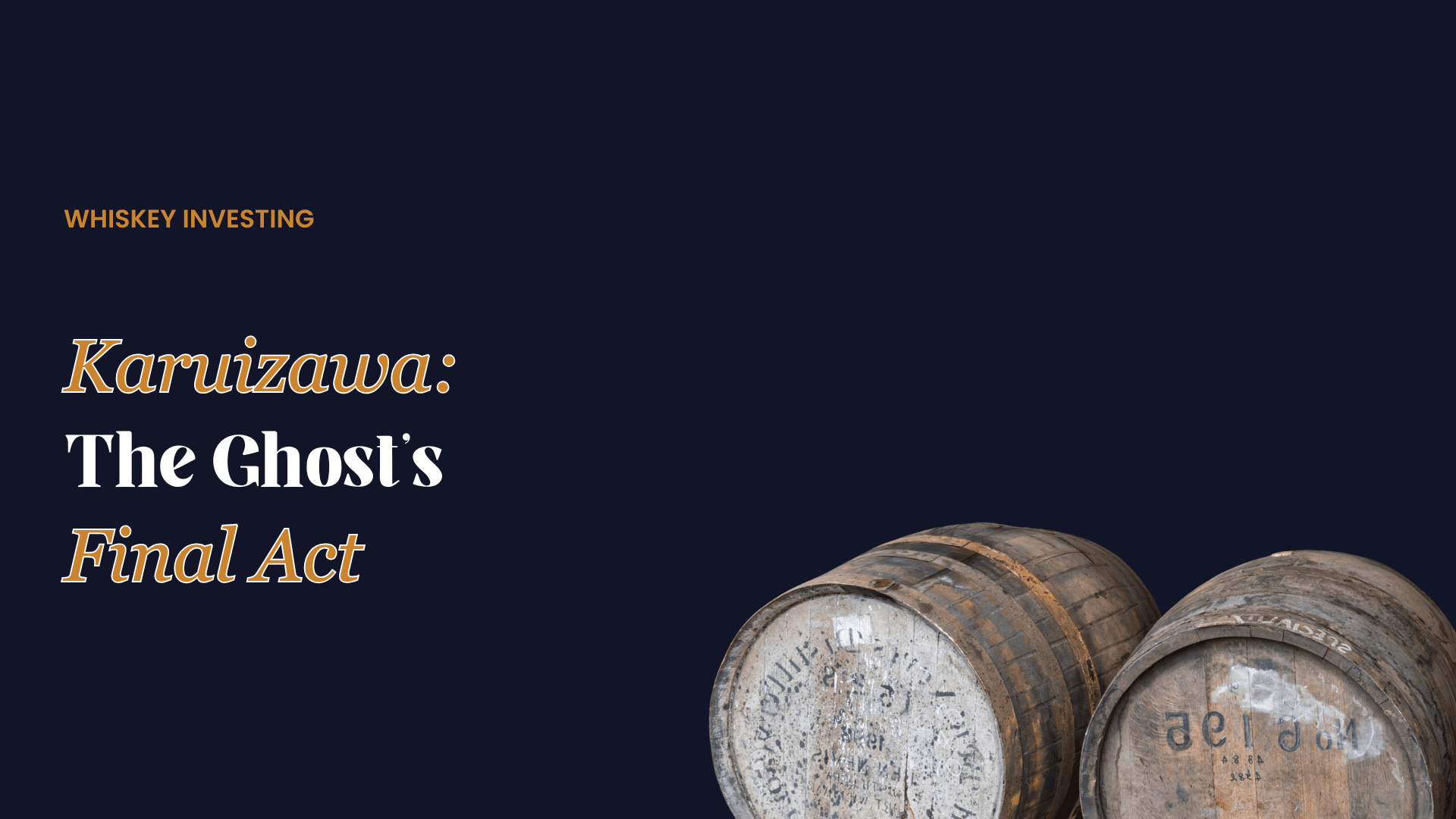
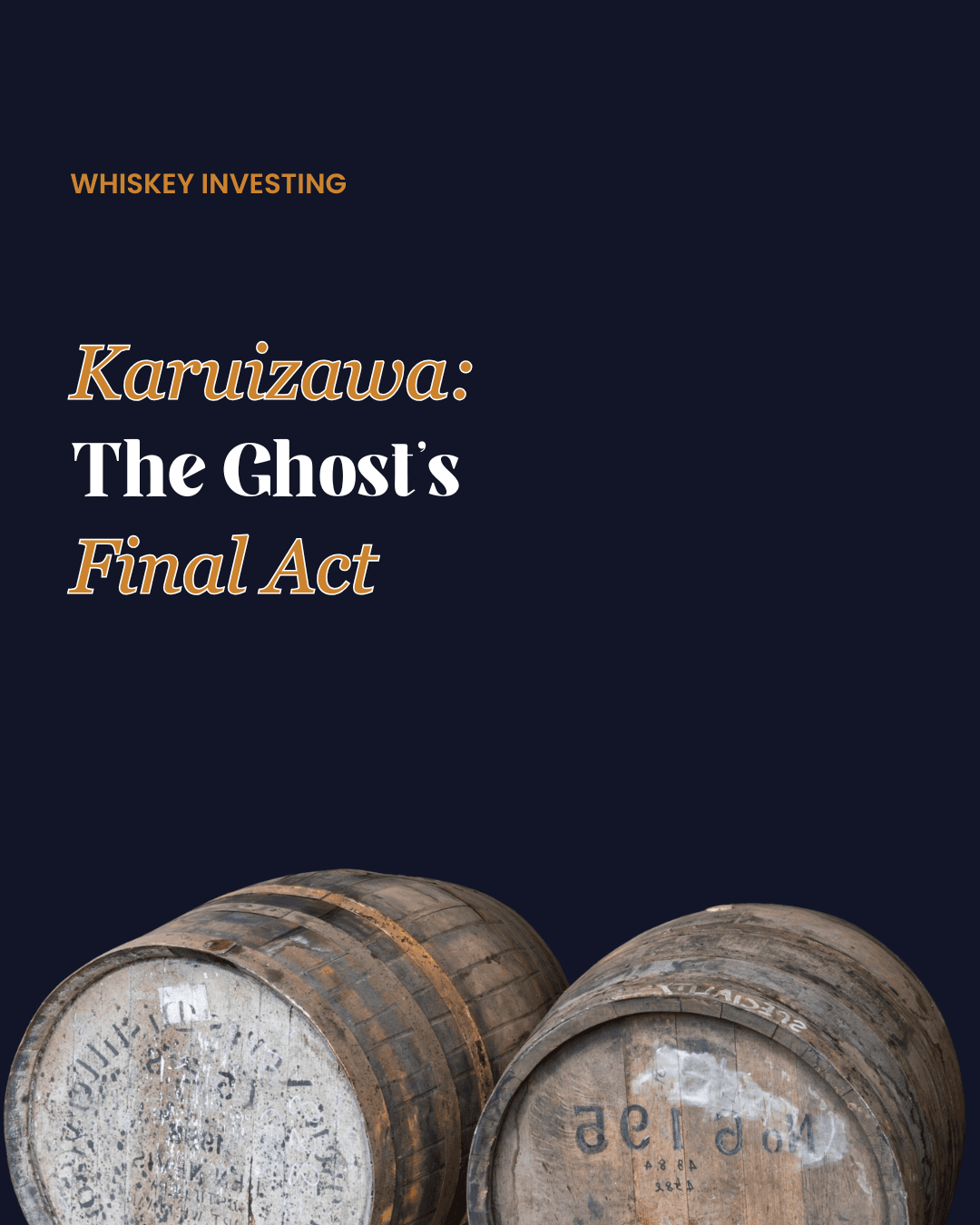
On March 10, 2026, two wooden casks changed hands at Christie's London for £4.25 million ($5.65 million). They weren't filled with Macallan or Bowmore. They contained Japanese whisky from a distillery that closed 26 years ago, was demolished in 2016, and whose site now sits empty in Japan's Southern Alps.
The sale set a new record as the highest-value lots ever sold at auction for Christie's Wine & Spirits. But more significantly, it marked the end of an era. These were almost certainly the last full casks of Karuizawa whisky that will ever reach the public market.
For collectors who watched the sale unfold, the £4.25 million price tag wasn't surprising. Over the past two decades, Karuizawa has transformed from an obscure Japanese distillery into whisky's most coveted ghost. Individual bottles routinely fetch £50,000-300,000 at auction. The distillery holds five of the top ten spots on WhiskyBase's highest-rated whiskies list. And now, the final chapter has closed with a sale that crystallizes everything extraordinary about Japanese whisky's rise.
This is the story of how a small distillery that nobody wanted became the most valuable whisky legacy in the world.
THE AUCTION: A FINAL CHAPTER
The Hammer Falls on History
Christie's called it "A Final Chapter: The Last Karuizawa Casks from the Collection of Sukhinder Singh." The auction took place in Christie's new London sales room, designed by Sir Jony Ive to commemorate the auction house's 260th anniversary.
Two casks were offered:
Cask #6195 (61.8% ABV, approximately 420 bottles):
Distilled 1999, matured in original 500-liter ex-sherry butt
"Fresher and fruitier, with notes of melon, banana, cola, pistachio, malt and lingering, soft, fragrant wood" - Sukhinder Singh
Less wood influence than typical Karuizawa, more delicate character
Currently stored at Tormore Distillery, Scotland
Cask #888 (57.7% ABV, approximately 420 bottles):
Distilled 1999, originally in ex-sherry butt, re-casked 2019 into first-fill sherry butt
"Earthy mushrooms, leather, soy, salted liquorice, tomato leaf - syrupy and beautifully mouth-coating" - Sukhinder Singh
Deep, rich, classically Karuizawa character
Currently stored at Tormore Distillery, Scotland
Both casks were distilled in 1999 - the penultimate year before Karuizawa ceased production in 2000. They represent the absolute final output from a distillery that would soon close forever.
Adam Bilbey, global head of wine and spirits at Christie's, captured the moment: "The excitement in the room for the sale of these two extraordinary Karuizawa casks was palpable as they quickly found new custodians. Full casks of Karuizawa are rarely offered at auction, and their provenance from the private collection of Sukhinder Singh - one of the most respected figures in the world of rare whisky - made this an especially compelling offering."
The sale included storage at Tormore Distillery (owned by Singh's Elixir Distillers) until 2029, giving buyers three additional years of maturation before bottling if desired. Singh notes the casks could age another decade before needing to be bottled.
THE DISTILLERY: KARUIZAWA'S IMPROBABLE LEGACY
From Unloved Blending Facility to Whisky Legend
Karuizawa's transformation from forgotten blending stock to auction sensation is one of whisky's most improbable success stories. The distillery occupied the lowest rung of Japanese whisky during its operational life, yet today commands prices that eclipse Scotland's most legendary names.
The Origins (1955-1976):
Karuizawa Distillery was founded in 1955 in Miyota, a resort town in Nagano Prefecture at the foot of Mount Asama, an active volcano. The site had previously operated as a winery owned by Daikoku Budoshu, a Japanese wine and spirits company. When Japanese whisky demand began rising in the mid-1950s, the winery was converted into a whisky distillery.
The location was chosen deliberately to mirror Scotland's whisky-producing regions - cool, high altitude, with volcanic spring water filtering through lava rock. But Karuizawa's microclimate proved more extreme: cold, snowy winters with temperatures plunging below freezing; hot, humid summers with 80% humidity; and an average annual temperature of just 8°C (46°F).
These conditions were murder on casks. But they created something extraordinary.
Production Methods: Scottish Tradition Meets Japanese Terroir
Karuizawa set out to make Japanese whisky in the Scottish tradition, specifically emulating heavily sherried malts like Macallan. The distillery adopted several distinctive practices:
100% Golden Promise Barley: From 1958 onward (exclusively from 1994), Karuizawa imported all its barley from Simpson's of Berwick in England. Golden Promise is a heritage spring barley variety prized for rich, oily character but despised by farmers for low yields. Macallan used it extensively in the 1960s-1980s. This gave Karuizawa's spirit an oily, full-bodied texture suited to long maturation.
Small Stills: The distillery housed just four small copper pot stills. Small stills create more copper contact, producing heavier, more flavorful spirit.
Sherry Cask Dominance: Karuizawa matured the vast majority of its whisky in ex-sherry casks imported from Spain. The casks were modified to fit the existing wine racks left over from the site's winery days.
Extreme Maturation Environment: Karuizawa's alpine microclimate created aging conditions found nowhere else. The dry, cold winters and humid summers concentrated the whisky dramatically. Unlike most distilleries where casks lose both volume and strength over time, Karuizawa casks often gained strength while losing volume - a phenomenon called "the angel's share in reverse."
Sukhinder Singh described tasting a 50-year-old Karuizawa at 68.3% ABV: "When it was in cask, it was 65.3% - after 50 years! It's incredible! It's insane! To get something tasting so good after 50 years at such a high strength was incredible."
Blending Era (1956-1976):
For its first two decades, virtually all Karuizawa production disappeared into blends bottled under the Ocean label. The distillery was Japan's smallest, producing whisky that management considered unremarkable. Single malt Scotch barely existed as a category in the 1960s, and Japanese single malts were unheard of.
In 1976, Karuizawa became the first Japanese distillery to release a single malt whisky to market. The distillery was renamed Ocean Karuizawa Distillery. But the market showed little interest.
The Decline (1990-2000):
Through the 1980s and 1990s, Japanese whisky demand collapsed. Karuizawa limped along, scaling back production year after year. In the 1990s, the distillery even stopped producing peated whisky in a doomed attempt to match changing consumer tastes.
Parent company Mercian was acquired by Kirin Holdings in 2007. Kirin had no interest in the whisky operation - they wanted Mercian's wine business. Karuizawa had already been mothballed in 2001. In 2011, Kirin officially closed the distillery and returned its distilling license.
The buildings were demolished by March 2016. The stills were sold off. The site was razed.
And that should have been the end.
THE RESURRECTION: HOW KARUIZAWA BECAME A CULT
Marcin Miller's £200 Gamble
In 2006, Marcin Miller - former editor of Whisky Magazine - received samples of old Karuizawa casks. Miller ran Number One Drinks, a company distributing Japanese whiskies to Europe. What he tasted stopped him cold.
Miller and business partner David Croll arranged a comprehensive tasting with whisky writer Dave Broom in 2007. They sampled 69 casks spanning vintages from the 1960s through the 1990s. Miller later said he would have happily bottled 68 of them as single-cask releases. That hit rate was unprecedented.
These weren't the young, underwhelming 12-year-olds that Japanese consumers had ignored. These were 30-, 40-, even 50-year-old casks that had been maturing quietly in Karuizawa's alpine warehouse, forgotten and destined for blending.
The sherry influence was massive - dark, rich, syrupy. But unlike over-oaked bombs, these whiskies maintained complexity and balance. Tropical fruits, leather, tobacco, dark chocolate, soy sauce, earthy mushrooms. They tasted like nothing else in the whisky world.
Miller began releasing single-cask Karuizawa bottlings through Number One Drinks in 2007. He priced them around £200 per bottle. Many collectors considered this extravagant for an unknown Japanese whisky.
The Market Explodes:
By 2010, word had spread. Karuizawa bottlings started selling out within days. Prices on the secondary market began climbing. When Kirin announced Karuizawa's site would be demolished, Number One Drinks negotiated to purchase the remaining 364 casks.
This is when collectors realized the mathematics of true scarcity. Number One Drinks bought 364 casks. At roughly 420 bottles per cask, that's approximately 153,000 bottles - total. Forever. For the entire world.
By comparison:
Macallan bottles millions of cases annually (12+ million bottles/year)
Buffalo Trace produces 300,000+ barrels of bourbon each year (75+ million bottles/year)
Even Scotland's "rare" closed distilleries like Port Ellen and Brora had thousands of casks rescued and bottled over decades
Karuizawa had perhaps 400-500 casks total rescued from blending. Spread across 15 years of releases (2007-2026), with most already consumed or locked in private collections. Maybe 100,000-150,000 bottles remain in existence worldwide - and that number shrinks with every bottle opened.
This is absolute scarcity. Not marketing scarcity. Not "limited edition" scarcity where the distillery makes more next year. Karuizawa closed in 2000. The buildings were demolished in 2016. The stills sold for scrap. The site is empty land. No new Karuizawa will ever be made.
The timing proved perfect for this scarcity narrative. Japanese whisky was entering a global boom period, driven by Suntory's Yamazaki Sherry Cask 2013 being named "World's Best Whisky" by Jim Murray in 2015. Suddenly, Japanese whisky had cachet.
And Karuizawa - rare, defunct, impossibly good - became the ultimate trophy. It represented everything collectors seek: a "ghost distillery" whose story reads like legend, underdog origins (unloved to legendary), geographic mystique (volcanic Japanese Alps), exceptional quality validated by critics, and most importantly, a supply that can only shrink, never grow.
The closed-distillery mystique mirrors what happened with Scotland's Port Ellen and Brora, but with even more dramatic scarcity. Those Scottish distilleries were reopened or had thousands of casks. Karuizawa is gone forever with maybe 500 casks ever rescued.
Prices escalated rapidly:
2007: £200 for a Karuizawa single cask
2013: ¥2 million (approximately £12,300) for the Karuizawa 1960 52-year-old at Whisky Live Tokyo
2015: £76,000 for the same 1960 52-year-old at Bonhams Hong Kong
2017: $141,551 for a 1960 52-year-old at Poly Auction Hong Kong
2020: £363,000 ($435,273) for a 1960 52-year-old at Sotheby's London - a world record for Japanese whisky
2026: £4.25 million ($5.65M) for two final casks at Christie's London
Marcin Miller's £200 bottles were trading hands for £10,000-15,000 within just a few years. The 52-year-old that sold for £76,000 in 2015 reached £363,000 just five years later.
The ghost distillery premium had arrived. And unlike most market manias, this one was backed by mathematics: finite supply, proven quality, and no possibility of new production. Ever.
SUKHINDER SINGH: THE KARUIZAWA CUSTODIAN
From The Whisky Exchange to Elixir Distillers
Sukhinder Singh was one of the early believers. Co-founder of The Whisky Exchange (launched 1999 from his family's London off-license business), Singh became Number One Drinks' first retail customer for Karuizawa.
"I first tasted it in 2006, and it was unlike anything I had ever experienced - rich, distinctive, and unforgettable," Singh recalls. "For me, it was quite different to anything I had tried. It ticked all the right boxes."
In 2012, as Karuizawa mania built, Number One Drinks invited Singh and two other major customers to Chichibu Distillery in Japan (where the casks had been relocated after Karuizawa's demolition) to select and purchase casks. Singh acquired approximately 30-35 casks.
Over the next decade, Singh bottled those casks through The Whisky Exchange and later through Elixir Distillers (the company he founded after leaving The Whisky Exchange). His releases became some of the most coveted Karuizawa bottlings ever made.
The Karuizawa Geisha Series:
Singh's most famous Karuizawa releases were the Geisha Series - limited edition bottlings celebrating the artistry of geisha performers who, like Karuizawa itself, were often misunderstood and underappreciated.
The series began in 2013 with The First Geishas (a 31-year-old sherry cask and 30-year-old bourbon cask), featured intricate label artwork, and grew into a legendary collection:
Aika Geishas (2014): 29- and 30-year-old
Golden Geishas (2017): 31- and 33-year-old
Emerald Geishas (2018): 33- and 35-year-old
Murasaki (Imperial Purple) Geishas (2018): allocated by ballot at £6,000 each, only 60 bottles per expression
Sapphire Geishas (2020): 31- and 36-year-old
Pearl Geishas (2019): 37- and 38-year-old - recent sales around £27,000
Ruby Geishas: 34- and 38-year-old
These bottles now trade for £18,000-30,000 at auction, with the rarest editions commanding significantly more.
Singh's philosophy was always to drink Karuizawa, not just collect it. "I always have a bottle open, which I nurture to last as long as possible," he says. "But always a pleasure to share with like-minded friends."
But he's frustrated by what Karuizawa has become: "A lot of companies took advantage and there was a lot of re-bottling and changing of strengths, and it actually spoiled it a little bit because people lost faith and lost trust, which really upsets me. Because when it's good, it's so good."
After bottling his final 30+ casks over the years, Singh held back the last two - cask #6195 and cask #888 - because they were the youngest. He waited for them to mature properly.
Now, at 26 years old, these casks represented his final Karuizawa holdings. And in March 2026, he sold them at Christie's.
THE LEGENDARY BOTTLINGS: KARUIZAWA'S GREATEST HITS
Bottles That Defined a Legend
Karuizawa's cult status rests on specific bottlings that collectors and connoisseurs cite as among the finest whiskies ever made:
The 1960 52-Year-Old "Zodiac Rat" (Cask #5627):
Distilled 1960, bottled 2013, 41 bottles
Current record: £363,000 at Sotheby's London (March 2020)
Holds the record for most expensive standard-sized Japanese whisky bottle at auction
Each bottle identified by a netsuke (wooden carving taken from the cask)
Serge Valentin: High 90s points
The bottle that broke Karuizawa into mainstream consciousness
The 1960 52-Year-Old "The Wanderer":
Different cask than "Zodiac Rat"
Sold for $141,551 (HK$1.1 million) at Poly Auction Hong Kong (April 2017)
Previous record holder before "Zodiac Rat"
The 1960 52-Year-Old "The Cockerel":
Sold for $118,500 (HK$918,750) at Bonhams Hong Kong (August 2015)
First Karuizawa to break six figures at auction
Karuizawa 50-Year-Old (approximately 1965 vintage):
Only 2 bottles produced
Bottled at 65.2% ABV
Sukhinder Singh: "This is the best Karuizawa I've tried and possibly one of the best whiskies I've ever tasted, full stop. The tropical notes are just incredible."
Sold for £100,100 at Whisky.Auction
Karuizawa 1965 Japonisme Edition (LMDW 60th Anniversary):
One of 60 bottles released by La Maison du Whisky
Final part of trilogy of Karuizawa 1965 vintages
Recent sale: $72,280 (March 2023, Whisky Auctioneer)
Pearl Geisha 37-Year-Old (Cask #4056):
Recent sales around £27,000
Part of Singh's iconic Geisha Series
Exclusive to FINE+RARE, only 71 bottles
Karuizawa 1967 42-Year-Old (Cask #6426):
Distilled 1967, bottled 2009, 58.4% ABV
One of the earliest "legendary" Karuizawa releases
Original release price: approximately £250
Current value: £20,000+
Notable for minimal presentation - glass bottle, white sticker label, thin cardboard box
Represented the era before Karuizawa's presentation became as valuable as the liquid
The Noh Series:
Multi-vintage blend from 1981-1984 distillates
Recent sale: $8,122 (March 2023)
Named after traditional Japanese Noh theatre
The Spirit of Asama Series:
Named after Mount Asama volcano
Highly sought-after single cask releases
Various vintages from 1960s-1990s
THE AUCTION RECORDS: TRACKING KARUIZAWA'S RISE
From £200 to £363,000
Early Sales (2007-2014):
2007-2010: £200-500 per bottle (Number One Drinks releases)
2013: First £10,000+ sales on secondary market
2014: Karuizawa 1967 Laphroaig sells for £5,700
The Acceleration (2015-2020):
August 2015: 1960 52YO "The Cockerel" - $118,500 at Bonhams Hong Kong
April 2017: 1960 52YO "The Wanderer" - $141,551 at Poly Auction Hong Kong (new record)
March 2020: 1960 52YO "Zodiac Rat" - £363,000 at Sotheby's London (current record for Japanese whisky)
Recent Auctions (2021-2026):
Pearl Geisha 37YO: £27,000
Karuizawa 1965 Japonisme LMDW: $72,280
Karuizawa 50YO (1 of 2): £100,100
Golden Geisha 31YO & 33YO: £20,000-25,000 per set
Standard single cask releases: £5,000-15,000
The Final Sale (March 2026):
Cask #6195 & Cask #888: Combined £4.25 million ($5.65 million) at Christie's London
Represents approximately £10,000-13,000 per potential bottle (420 bottles per cask)
Highest-value lots ever sold at Christie's Wine & Spirits
THE FUTURE: WHAT COMES NEXT FOR KARUIZAWA
The Last Bottles and the End of an Era
With the sale of Singh's final two casks, the Karuizawa story enters its final act. A few privately-held casks remain unbottled, but Christie's has stated these March 2026 casks are "extremely unlikely" to be followed by further public cask sales.
What's left:
Small number of private casks (exact count unknown, likely fewer than 50)
Existing bottled inventory in private collections
Secondary market circulation
The Ichiro Akuto Wild Card:
One fascinating footnote: In 2006, during Karuizawa's final months, Ichiro Akuto (founder of Chichibu Distillery) completed an internship at Karuizawa under master distiller Osami Uchibari. As part of the arrangement, Akuto distilled a small run of Karuizawa spirit and filled it into various casks, including rare Mizunara oak casks.
These casks still lie in Akuto's warehouses. They represent the absolute final Karuizawa ever distilled - younger than any existing casks, from the last production run. When Akuto eventually bottles them, they'll command extraordinary premiums as the true "last Karuizawa."
The Komoro Question:
In 2020, Karuizawa Distillers announced plans to build Komoro Distillery near the original Karuizawa site. Construction was completed in 2023, and the distillery began producing spirit.
But is it Karuizawa? Different owner, different equipment, different site. The name references the location, not the distillery lineage. Collectors view Komoro as an entirely separate entity.
Similarly, a new "Karuizawa Distillery" opened about 7km from the original site in 2023, again with no connection to the original operation beyond geography.
These distilleries may produce excellent whisky. But they aren't Karuizawa - the legend, the ghost, the finite resource that sold for £4.25 million this March.
THE SUKHINDER SINGH PHILOSOPHY: TOO PRETTY TO DRINK?
Against the Museum Mentality
Sukhinder Singh articulated a concern that haunts ultra-premium whisky: "Sometimes you have packaging that you say it's too pretty to drink. What's the point? For us, that's in our philosophy. We can't over-package it so that nobody wants to drink it. That would just be a waste."
He sees this with Karuizawa: "Prices got so crazy that people were actually afraid to drink it, which was a problem."
The irony cuts deep. Karuizawa was saved because Marcin Miller and David Croll tasted it and recognized its quality. The Geisha Series succeeded because Singh created bottles worth collecting. The auction records exist because these whiskies, when opened, proved extraordinary.
But at £363,000 per bottle, who opens Karuizawa anymore?
Singh does. He keeps Karuizawa open in his home, nursing bottles to make them last, sharing with friends. "It's a different level. It's so unique. There is no other malt that tastes anything like Karuizawa."
He brought out a 50-year-old Karuizawa at a recent tasting in Singapore - no ceremony, no fanfare, just an earnest invitation: taste this, understand it, join the conversation.
That generosity represents Karuizawa's dual nature. It's simultaneously:
A financial asset worth millions
A liquid meant to be experienced
The best collectors understand both sides. They invest in scarcity and quality, but they also drink what they collect. They share bottles. They open the legends.
Because ultimately, whisky locked in a vault isn't whisky. It's just wood and alcohol, aging in silence, waiting for someone to care enough to experience it.
HOW DRAM PROVIDES ACCESS TO LEGENDARY JAPANESE WHISKY
While single bottles of Karuizawa now command five- and six-figure prices, Dram's fractional ownership platform democratizes access to legendary Japanese whisky including rare Karuizawa releases and other closed-distillery bottlings.
Through Dram, investors can:
Own fractional shares in authenticated rare Japanese whisky
Participate in the market that has produced 300%+ returns on select bottles
Access professionally-managed storage and insurance
Benefit from expert curation and authentication
Japanese whisky represents one of the fastest-growing segments in collectible spirits, and Karuizawa exemplifies why: absolute scarcity, proven quality, cross-market appeal, and a story that captures imagination globally.
FREQUENTLY ASKED QUESTIONS
Q: Why did Karuizawa close if the whisky was so good?
Nobody knew it was exceptional until 15-20 years after closure. During Karuizawa's operational life (1955-2000), virtually all production went into blends sold under the Ocean label. Japanese consumers in the 1980s-1990s weren't buying single malts - they wanted blended whisky or were shifting to other spirits entirely. The 30- and 40-year-old casks that command six figures today were just forgotten blending stock in 2000. Only when Marcin Miller tasted them in 2006-2007 did anyone realize what Karuizawa had achieved. By then, the distillery was already demolished.
Q: How can a 1999 cask be worth £2+ million when it's only 26 years old?
The value isn't just age - it's absolute scarcity combined with proven quality. These are among the last Karuizawa casks in existence. The distillery will never produce again. Each bottle opened reduces the total supply forever. Additionally, buyers aren't just purchasing whisky - they're acquiring complete creative control over bottling, timing, and presentation for 420 bottles that will immediately command £10,000-15,000 each on release. At £2 million per cask, that's approximately £4,761 per bottle pre-bottling cost, with immediate secondary market values of £10,000+.
Q: Is Karuizawa actually better than Macallan or Bowmore, or is it just hype?
Both. Critical consensus supports Karuizawa's exceptional quality - five bottles in WhiskyBase's Top 1000 highest-rated whiskies, consistent 90+ point scores from Serge Valentin, universal acclaim from respected whisky writers. The sherry-forward, heavily-aged expressions genuinely represent some of the finest whisky ever made. But the astronomical prices also reflect hype, scarcity psychology, and "trophy hunting" by collectors. A £363,000 Karuizawa versus a £15,000 Macallan 40-year-old isn't 24x better in quality - the price premium reflects rarity and collector demand more than liquid quality alone.
Q: What happens to Karuizawa's legacy now that the last casks are sold?
The finite supply becomes even more precious. With no new casks entering the market, existing bottled inventory appreciates as bottles are consumed. We'll see increased authentication scrutiny as counterfeiting risk rises. Private cask holders may release final bottlings over the next 5-10 years. Ichiro Akuto's 2006 casks (the absolute final Karuizawa distillate) will likely be bottled eventually, commanding extraordinary premiums. But ultimately, Karuizawa transitions from "rare but obtainable" to "museum piece" - most bottles will sit in collections, rarely opened, appreciated more as artifacts than as drinking whisky.
The £4.25 million cask sale demonstrates sustained demand at the highest end, but entry-level Karuizawa (£5,000-10,000 bottles) faces more price sensitivity. For most investors, fractional ownership through platforms like Dram offers better liquidity and lower entry barriers than purchasing full bottles.