The Uncle Nearest Implosion: What Receivership Teaches Us About Founder-Driven Spirit Brands
Feb 9, 2026
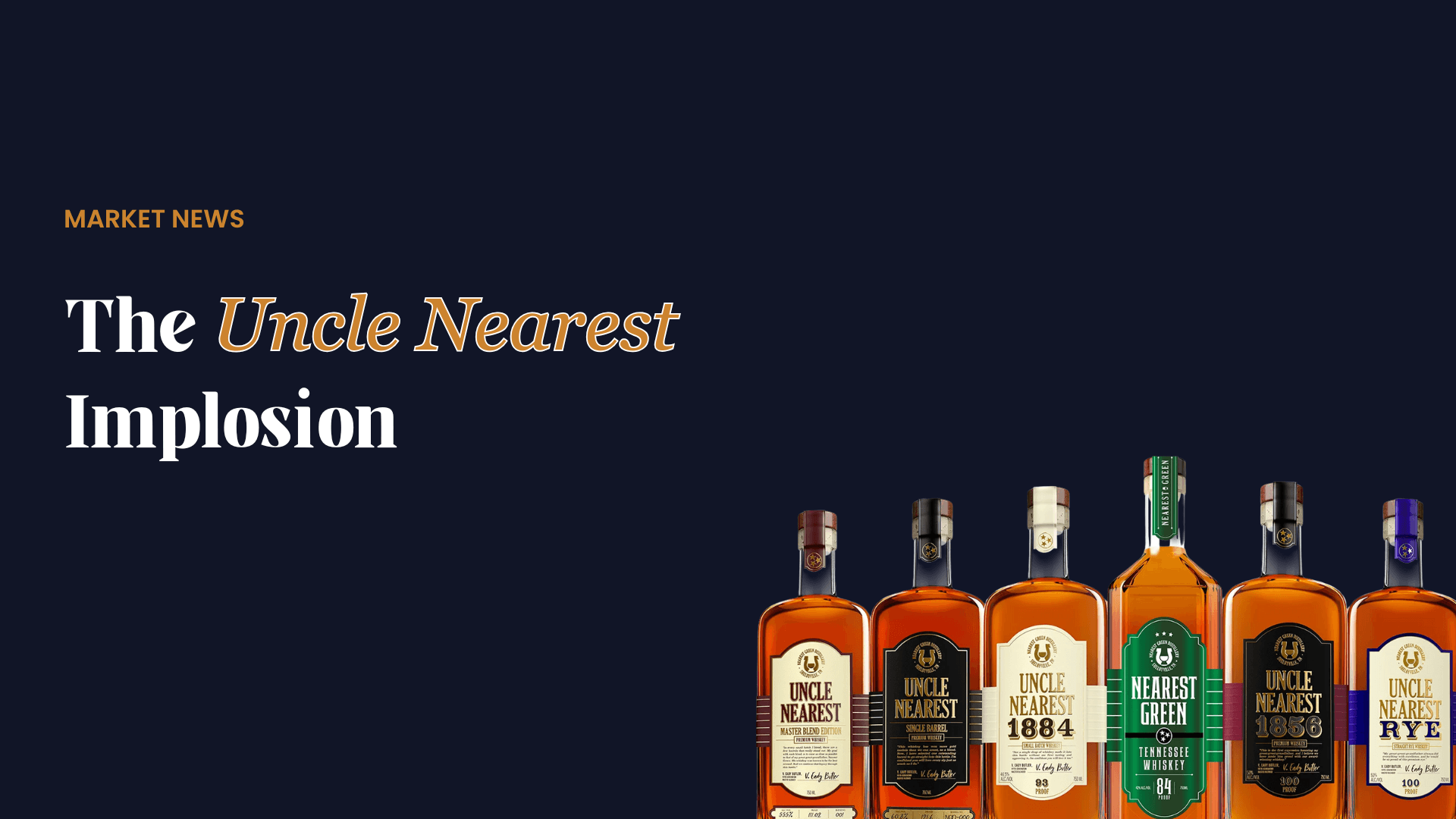
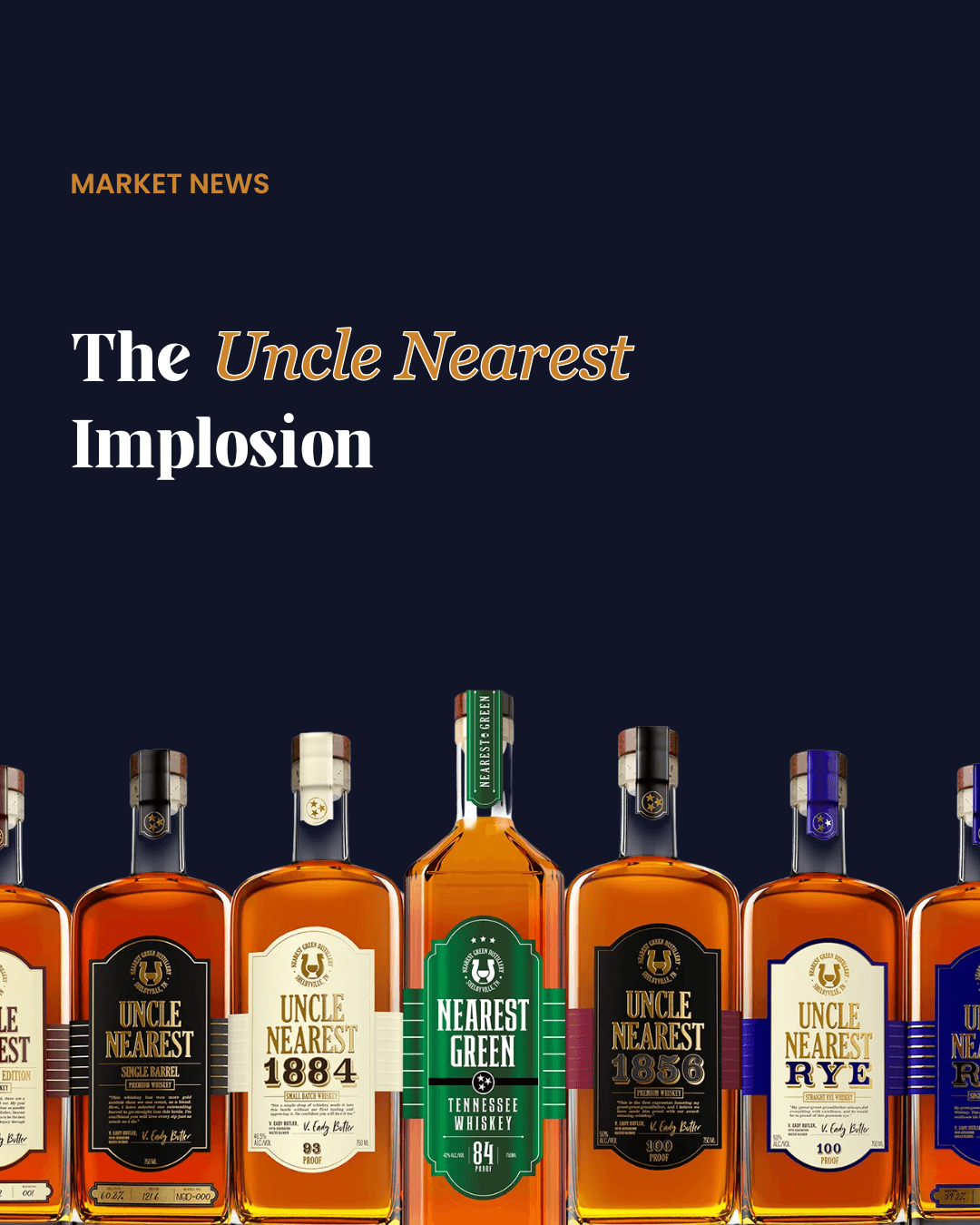
The award-winning Black-owned whiskey brand that became a symbol of heritage, representation, and entrepreneurial success is now fighting for survival. Uncle Nearest is at risk of financial insolvency and owes millions of dollars to external parties including vendors, according to claims from the company's receiver in an affidavit filed February 2 in U.S. District Court.
As a federal judge hears arguments today in Knoxville, Tennessee, the stakes couldn't be higher: If the court-ordered receivership ends and control returns to founders Fawn and Keith Weaver, receiver Phillip Young warns Farm Credit Mid-America may immediately foreclose on approximately $164 million in debt.
This isn't just a bankruptcy story. It's a case study in what can go catastrophically wrong when founder passion, rapid growth, and financial controls collide.
From Fastest-Growing to Foreclosure Risk: The Timeline
Uncle Nearest's rise was meteoric. The brand was founded in 2016, named after Nearest Green, the first known African American master distiller who taught Jack Daniel the distilling process while enslaved. Fawn Weaver built the brand on this powerful origin story, winning hundreds of awards and claiming to be the second-largest Tennessee whiskey brand behind Jack Daniel's, with the Nearest Green Distillery attracting over 200,000 visitors annually.
Weaver built the brand without traditional venture capital money, winning over at least 163 individual investors with an average contribution of $500,000 according to Forbes.
Then everything unraveled.
July 2025: Farm Credit Mid-America filed a lawsuit claiming it was owed $108 million, alleging Uncle Nearest had been in default on loans as early as January 2024.
September 2025: Court appoints Phillip G. Young as receiver to operate the company.
January 2026: The Weavers filed a civil lawsuit against former CFO Michael Senzaki, claiming breach of fiduciary duty, fraud, defamation, and more, blaming him for the financial crisis.
February 2, 2026: Receiver Young filed an explosive affidavit claiming Uncle Nearest is insolvent and owes millions to WhistlePig, American Spirits, and other vendors.
February 9, 2026: Federal hearing to determine the brand's fate.
The Insolvency Claims: What the Receiver's Affidavit Reveals
Receiver Young's February 2 filing paints a dire financial picture.
The Debt Breakdown
If Farm Credit pulls its support, Uncle Nearest will immediately be on the hook for about $164 million in debt, including nearly $22 million in debts to vendors and $4.1 million to WhistlePig.
Uncle Nearest also owes more than $10 million to Advanced Spirits, which purchased barrels of whiskey from Uncle Nearest that the company is required to repurchase at higher prices.
Young estimates total unsecured debt is about $54 million and total liabilities exceed $110 million.
The Cash Flow Crisis
When Young took over in September, Uncle Nearest was unable to cover its $450,000 payroll except with a loan from the payroll processing company, repaid by advances from Farm Credit.
Young said before he took over the company was losing roughly $1 million a month; he's lowered those losses to around $100,000 a month, with Farm Credit covering ongoing losses.
But if the receivership ends: Young claims the company's monthly losses would balloon to approximately $2 million per month.
$164M total debt - $450K payroll crisis = A company on life support
The Failed Sale Attempts
Young's financial advisors contacted more than 100 potential buyers, with only one, NexGen 2780 LP, expressing preliminary interest at $108 million, described as nonbinding with significant unanswered questions.
Translation: No one wants to buy Uncle Nearest at a price that covers the secured debt, let alone makes investors whole.
The Founders Fight Back: Competing Narratives
Fawn and Keith Weaver aren't going down without a fight. Their January 20 emergency motion tells a very different story.
Sales Performance Under Receivership
The Weavers cited Nielsen retail scan data showing Uncle Nearest moving from consistent outperformance of the wider American whiskey category to significant underperformance following the receiver's appointment.
The brand was underperforming the market by 18.3 percentage points in January 2026, a sharp reversal from January 2025, when Uncle Nearest outperformed the market by more than 30 points.
The Weavers attribute the decline to operational disruption, inventory shortages during key selling periods, and lack of category-specific expertise in managing a premium American whiskey brand under receivership.
The Blame Game: Ex-CFO Lawsuit
In January 2026, the Weavers sued former CFO Michael Senzaki for fraud, breach of fiduciary duty, and four other counts, claiming his alleged misconduct led the company to its present murky financial situation.
Farm Credit maintains that Uncle Nearest's collateral, like its barrels of whiskey, were inflated. In their suit, the Weavers blame this on the ex-CFO.
The movants dispute the claim that about $21 million in whiskey inventory, or around 20,000 barrels, was missing.
The Weavers' defense: They're victims of financial misconduct by their CFO, and the receivership is destroying brand value faster than it's protecting creditors.
[INLINE IMAGE: Split screen comparison - Nielsen sales data showing Uncle Nearest pre-receivership vs. post-receivership performance]
What Went Wrong: The Financial Control Failures
Strip away the competing narratives and a clear pattern emerges: catastrophic financial controls failure.
Red Flag #1: The Missing Bank Records
Young states that despite asking several times, he did not receive full bank records for all related companies, with new internal emails and banking details showing accounts not previously shared with the court.
Young cited a series of transfers beginning in 2021 that moved funds from an Uncle Nearest account through accounts associated with Fawn Weaver and Grant Sidney, ultimately ending in a Canadian company.
Red Flag #2: The Convoluted Corporate Structure
Young asked the court to add Shelbyville Barrel House BBQ, Humble Baron, Grant Sidney, Quill and Cask Owner, Nashwood, Shelbyville Grand, and 4 Front Street to the receivership, arguing these entities operated essentially as one company.
Why does a whiskey brand need seven related entities? Complex corporate structures can serve legitimate tax and liability purposes, or they can obscure financial reality from creditors and investors.
Red Flag #3: The Valuation Disputes
The receiver disputed valuations advanced by the Weavers for certain assets, including aging whiskey barrels.
Barrel valuation disputes are common in distressed whiskey companies. Here's why: aging whiskey is illiquid, subjective to value, and often inflated on balance sheets to support borrowing. When lenders demand audits, "misstatements" frequently emerge.
Red Flag #4: The Desperate Fundraising
In February 2025, Uncle Nearest issued two $10 million convertible promissory notes, a move that typically signals severe cash constraints.
What This Teaches About Founder-Driven Spirit Brand Risks
Uncle Nearest isn't the only founder-driven spirit brand facing turbulence. The broader category is experiencing a reckoning.
The Founder Brand Vulnerability
Why founder-driven brands look attractive:
Authentic origin story and mission-driven narrative
Founder's passion and personal commitment
Compelling narratives (Uncle Nearest's Nearest Green story is genuinely powerful)
Investor excitement around "brand equity" and cultural impact
Direct connection between brand and founder's vision
Why they often fail:
Founders lack operational experience in spirits
Brand awareness ≠ sustainable unit economics
Founder involvement often heavy on vision, light on financial controls
Financial controls frequently weak (founders trust "their team")
Growth prioritized over profitability
Emotional attachment can cloud business judgment
The whiskey brand didn't just win hundreds of awards for its spirits over the years, but it also stood as a beacon of Black history, invention, and wealth creation. That cultural significance made financial scrutiny feel almost inappropriate, until the numbers forced a reckoning.
The Structural Problem: Growth Without Guardrails
Weaver built the brand without traditional venture capital money, which sounds impressive until you realize traditional VC comes with financial oversight, board governance, and experienced operators who ask hard questions.
The movants point out that the Farm Credit officer who approved $67 million in loans over 13 months, averaging $2.5 million every two weeks through the company's former CFO, has not testified under oath in the case.
That's $67 million advanced in 13 months with apparently limited oversight. When lenders become enablers of unchecked growth, disasters follow.
The Receivership Debate: Stabilization or Destruction?
Here's where it gets genuinely complicated: both sides might be right.
The Case for Receivership
✅ Company was burning $1M/month, now $100K/month
✅ Payroll crisis stabilized through Farm Credit arrangement
✅ 12 employees laid off to cut costs
✅ Non-core assets (French Cognac distillery, Martha's Vineyard estate) being sold
✅ Forensic accounting revealing financial reality
The Case Against Receivership
✅ Sales performance collapsed 18.3 percentage points
✅ Distributor confidence shattered by uncertainty
✅ Inventory shortages during key selling periods
✅ Receiver lacks spirits industry expertise
✅ Brand value eroding faster than financial stabilization
In October 2025, Young offered a positive outlook: "The opportunity for the company's successful emergence from receivership is very good". By February 2026, his tone had darkened considerably.
What changed? Likely, the forensic accounting revealed financial realities worse than initially understood.
FAQ: Uncle Nearest Receivership & Celebrity Brand Risks
Q: Will Uncle Nearest survive?
A: It depends on today's (February 9) hearing. If the judge maintains the receivership and Farm Credit continues funding, the brand limps forward. If control returns to the Weavers without creditor confidence, foreclosure becomes likely. A third option: court-supervised sale, though no buyer has offered more than the secured debt.
Q: Who's telling the truth, the receiver or the Weavers?
A: Probably both, partially. The receiver's financial analysis appears sound (insolvency claims backed by bank records). The Weavers' sales performance data is also accurate (Nielsen doesn't lie). The reality: Uncle Nearest was financially insolvent before the receivership, and the receivership has damaged brand performance. Both things can be true.
Q: What happens to investors who put in $500K each?
A: At least 163 individual investors contributed an average of $500,000. With total liabilities exceeding $110 million and no buyer offering enough to cover secured debt, equity investors are likely wiped out. This is the dark side of "no traditional VC", no deep pockets to rescue the cap table.
Q: Should I avoid founder-driven spirit brands?
A: Not categorically, but apply rigorous due diligence:
Who actually operates the business? (Founder involvement in ops, not just vision)
What are the financial controls? (Experienced CFO, external audits, board oversight)
What's the unit economics? (Margin per bottle, customer acquisition cost, path to profitability)
Who are the investors? (Experienced spirits investors or just believers in the story?)
Looking Ahead: The Founder-Driven Brand Reckoning
Uncle Nearest's receivership is part of a broader founder-driven spirit brand shakeout. The 2010s saw an explosion of passion-driven whiskey/tequila/vodka brands built on compelling narratives and cultural significance, often backed by individual investors rather than traditional VC. Many will not survive the 2025-2026 consumption slowdown.
What survives:
Founder brands with genuine operational expertise (experienced operators, not just visionaries)
Brands with sustainable unit economics (profitable per bottle, not growth-at-any-cost)
Brands with institutional backing or governance (experienced board members, external oversight)
What fails:
Brand awareness without distribution economics
Rapid growth funded by debt without profitability path
Founder attachment without operational discipline
Financial controls that trusted "the team" blindly
Uncle Nearest is named after Nearest Green, the first known African American master distiller, who was instrumental in creating Tennessee whiskey and taught Jack Daniel the distillation process while enslaved. That story, and the brand's cultural significance, makes this collapse particularly painful.
But sentiment doesn't pay creditors. And cultural importance doesn't guarantee financial viability.
The lesson for spirit brand investors: Inspect the books as closely as you smell the bourbon. The best stories don't always make the best businesses.