The Bourbon Trail's Tourism Revolution: When Distillery Visits Became the New Wine Country
Feb 11, 2026
On January 1, 2026, Jim Beam halted bourbon production entirely at its flagship Clermont distillery for the year. But here's what didn't stop: the James B. Beam campus will remain open for visitors during that time, as the company plans to continue tours and tastings.
Welcome to bourbon's tourism revolution, where the experience of visiting a distillery has become as valuable as the whiskey it produces.
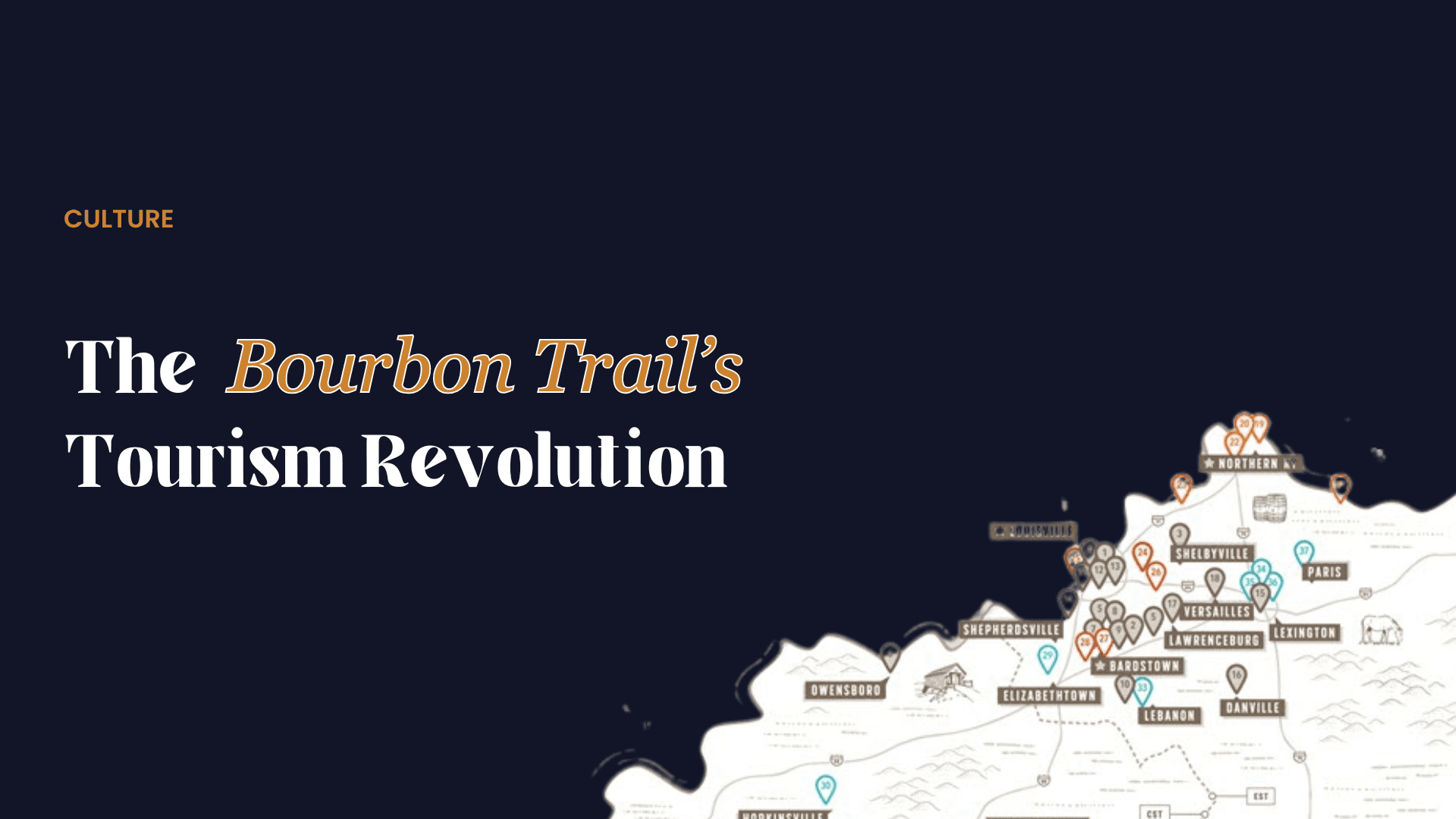
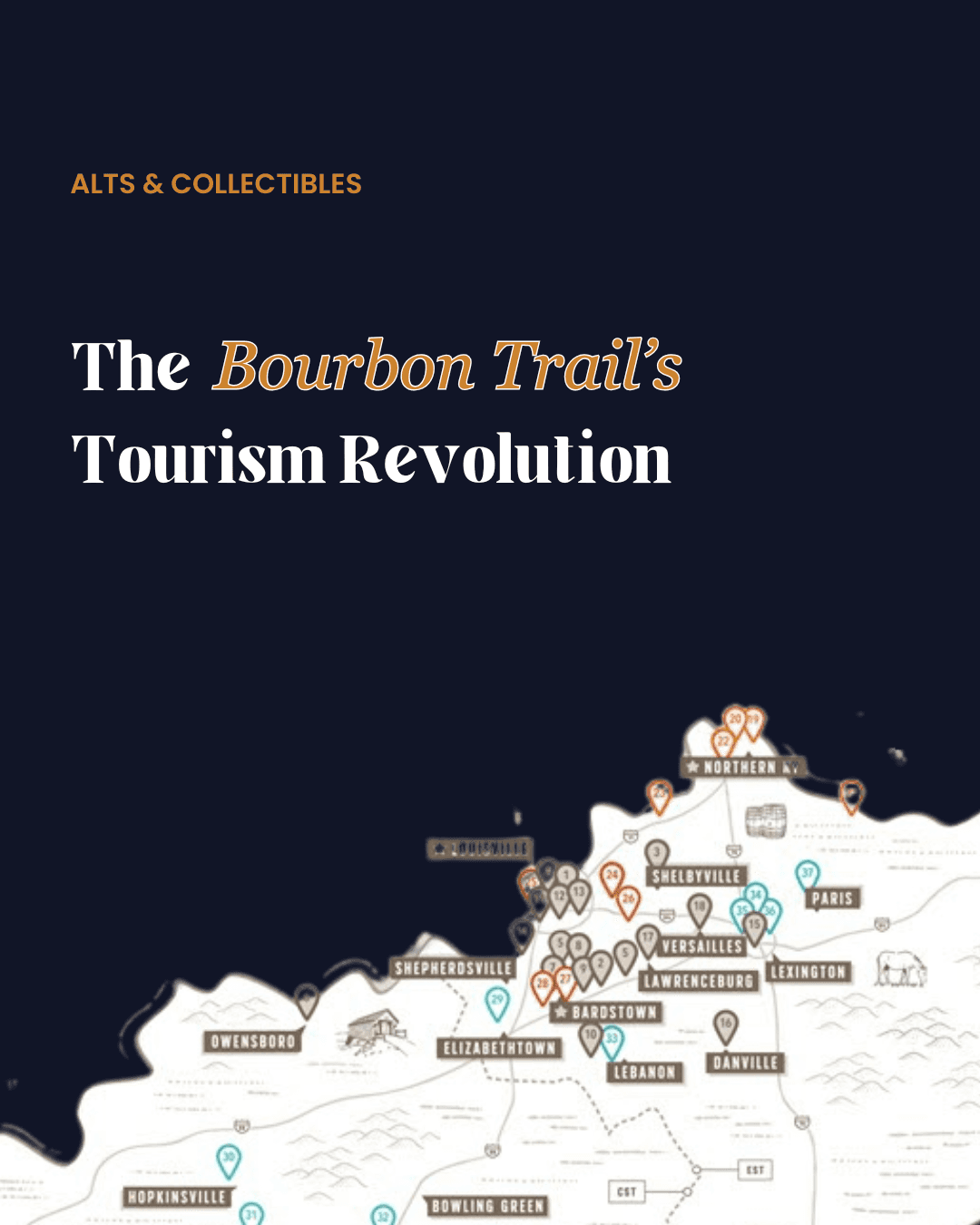
The Kentucky Bourbon Trail now attracts more than 2.5 million visitors annually, generating tourism revenue that's keeping distilleries solvent even as production stalls and consumption declines. The trail just expanded to an all-time high of 68 stops across 32 of Kentucky's 120 counties (January 29, 2026).
Bourbon isn't just a drink anymore. It's a destination.
From Seven Distilleries to a $9 Billion Tourism Economy
Since its launch in 1999, the Kentucky Bourbon Trail adventure has seen tremendous growth, elevating tourism for Kentucky and consistently breaking attendance records.
Let's put that 2.5 million figure in context:
Napa Valley: ~3.85 million annual visitors
Sonoma County: ~7 million annual visitors
Kentucky Bourbon Trail: 2.5 million (rapidly closing the gap)
But here's the difference: Almost 80% of Kentucky Bourbon Trail visitors are from out of state, and research shows Bourbon Trail visitors have much higher household income than typical Kentucky tourists, trend younger, stay longer, come in larger groups, and spend more money in Kentucky communities.
Bourbon is a $9 billion economic and tourism powerhouse for Kentucky, generating more than 23,100 jobs with $2.2 billion in salaries and benefits.
That's not whiskey sales, that's the bourbon industry including tourism, hospitality, agriculture, and cooperage.
2.5M visitors × higher income × longer stays = $9B Kentucky economic impact
The Paradox: Production Declines, Tourism Explodes
Here's what makes the current moment so fascinating: bourbon production is collapsing while bourbon tourism is booming.
Production reality:
16.1 million barrels in storage, highest since Prohibition
American whiskey production down 28% in 2025
Jim Beam, Heaven Hill, Brown-Forman all cutting production
Americans' alcohol consumption at 54%, near a 90-year low
Tourism reality:
68 stops on the Bourbon Trail, up from 56 in 2024
2.5M+ annual visitors (pre-pandemic: ~1M)
Even as alcoholic beverages see a slowdown in sales, bourbon tourism continues to thrive
Uncle Nearest's Nearest Green Distillery attracted 200,000 visitors annually despite the brand's financial crisis
How do we explain this?
The Experience Economy Thesis
People aren't drinking less bourbon because they love it less. They're drinking less because 53% of U.S. adults now say moderate drinking is bad for their health, up from 28% in 2015. But they still want to experience bourbon culture.
Distillery visits offer:
Education (grain-to-glass production process)
Heritage (200+ years of American craft tradition)
Instagram moments (rickhouses, barrel tastings, copper stills)
Regional identity (Kentucky pride, Southern hospitality)
Controlled consumption (guided tastings vs. heavy drinking)
You can love bourbon culture without consuming a liter weekly. Tourism captures that passion more sustainably than bottle sales.
The New Bourbon Trail: 68 Stops and Growing
The January 29, 2026 expansion includes new distillery experiences and urban satellite tasting rooms, from far Western Kentucky to the amber triangle of Louisville, Lexington and Bardstown.
The Louisville Urban Experience
New Louisville stops include Left Bank Distilling Co. and Chicken Cock Whiskey Circa 1856 tasting room, reflecting a strategic shift: bringing bourbon experiences to urban centers where tourists are already staying.
Why does this matter? Accessibility. Not everyone wants to rent a car and drive rural Kentucky backroads. Urban tasting rooms let hotel-bound visitors experience bourbon between restaurant dinners and museum visits.
Most visitors use Louisville as a home base, spending a day or two exploring the city's "Whiskey Row" and other distilleries within city limits.
The Bardstown "Bourbon Capital" Hub
Bardstown is the heart of bourbon development, offering visitors much more than just tastings, they can immerse themselves in the history of Bourbon, visit essential distilleries, and enjoy the hospitality of the local community.
Stacey Phelps, President of Bardstown-Nelson County Tourism, said "Bardstown is proud to be the Bourbon Capital of the World, and this expansion reinforces what we've always known: Kentucky Bourbon is more than a drink, it's an experience meant to be shared".
Bardstown's proximity to 12+ distilleries (Jim Beam, Heaven Hill, Willett, Maker's Mark, Bardstown Bourbon Co., Lux Row) makes it the densest bourbon concentration globally.
The "Build Your Own Bourbon Trail" Strategy
The KDA is introducing a "Build Your Own Bourbon Trail" online feature, allowing travelers to craft and share itineraries with friends.
This is brilliant positioning. With 68 stops, no one can visit them all in a long weekend. Customization lets visitors feel ownership over their journey, they're not just checking boxes, they're curating experiences.
The Revenue Model: Why Tourism Saves Distilleries
When Jim Beam paused production but kept its visitor center open, it revealed bourbon's new economic model: experience revenue can sustain operations when bottle sales can't.
The Math of Distillery Tourism
Typical distillery tour economics:
Tour ticket: $15-50 per person
Premium experiences: $75-150 (barrel tastings, bottle-your-own)
Gift shop purchases: $50-200 per visitor
Restaurant/bar revenue: $30-100 per visitor
Total per visitor: $100-300
Annual revenue potential:
Small distillery (10K visitors/year): $1M-3M tourism revenue
Mid-size (50K visitors): $5M-15M
Large (200K+ visitors): $20M-60M+
Uncle Nearest's Nearest Green Distillery, attracting 200,000 visitors annually, likely generated $20M-40M in tourism revenue, potentially more than bottle sales in some markets.
Jim Beam's choice to amplify tourism and experiential revenue while production pauses is a smart move for a brand facing a production slowdown.
The Margin Advantage
Here's the secret: tourism margins often exceed bottle margins.
Bottle sales:
Wholesale price to distributor: ~50% of retail
Production costs: 30-40% of wholesale
Marketing/overhead: 20-30%
Net margin: 10-20% (if you're lucky)
Tourism:
Tour ticket: 80-90% gross margin (variable costs minimal)
Gift shop: 40-60% gross margin
Restaurant: 60-70% gross margin (especially bourbon cocktails)
Net margin: 40-60%
Tourism is a higher-margin, cash-positive business that doesn't require years of barrel aging or distributor negotiations.
The Cultural Shift: Bourbon Tourism as Aspirational Travel
The Kentucky Bourbon Trail has grown into a global, bucket-list phenomenon, attracting visitors from all 50 states and dozens of countries.
How did bourbon tours become aspirational?
The Wine Country Playbook
Napa Valley cracked the code in the 1970s-80s: position regional agriculture as luxury tourism. Kentucky borrowed the playbook:
Napa:
Premium wine → Vineyard tours → Michelin restaurants → Luxury hotels
Outcome: Wine country = sophisticated weekend getaway
Kentucky:
Premium bourbon → Distillery tours → Farm-to-table restaurants → Boutique hotels
Outcome: Bourbon country = sophisticated weekend getaway
It's possible to visit a number of the best-known distilleries within three or four days, with most using Louisville as a home base.
The Social Media Accelerant
Instagram and TikTok transformed distillery visits from hobbyist activity to aspirational content. Rickhouse photos, barrel tasting videos, and copper still close-ups generate engagement, driving more visitors, more content, more visitors.
The flywheel effect: viral content → increased visitation → more viral content.
The Collector Crossover
Bourbon collectors don't just buy bottles, they make pilgrimages. Visiting the distillery where your prized allocation was made creates emotional connection beyond the liquid.
This is why distilleries offer exclusive "distillery-only" releases. They're not just driving gift shop sales, they're creating reasons to visit beyond the tour itself.
FAQ: Planning Your Bourbon Trail Experience
Q: How many distilleries can I visit in a weekend?
A: Pick about 3-5 stops each day and consider transit times, gift shop time, tour lengths. Most visitors comfortably hit 6-10 distilleries over a long weekend.
Q: Do I need to book tours in advance?
A: Yes. Tours and tastings can sell out 30, 60, or even 90 days in advance. Popular distilleries (Buffalo Trace, Maker's Mark, Woodford Reserve) require early booking, especially weekends.
Q: What's the best home base?
A: Louisville is the logical starting point, with many distilleries within the city and easy access to Bardstown (1 hour south) and Lexington/Frankfort (1 hour east).
Q: Is bourbon tourism impacted by the production slowdown?
A: Even as alcoholic beverages see a slowdown in sales, Kentucky Distillers' Association President Eric Gregory said he does not believe bourbon tourism will be impacted by headwinds like shifts in consumer trends and tariffs. Tourism and consumption are increasingly decoupled.
The Investment Angle: Distilleries as Experience Businesses
For whiskey investors, the tourism boom has valuation implications.
Traditional distillery valuation:
Production capacity × wholesale price per barrel × aging inventory = enterprise value
Heavy on physical assets (land, buildings, barrels)
Tourism-driven valuation:
Annual visitors × revenue per visitor × margin = experience revenue
Branded experiences command premium multiples
Visitor volume growth = valuation growth
Uncle Nearest (in Tennessee), despite $164M debt and insolvency claims, still attracts 200,000 annual visitors. That visitor base has tangible value to an acquirer even if bottle sales have collapsed.
Distilleries with strong tourism infrastructure (visitor centers, restaurants, event spaces, lodging) are becoming experience businesses that happen to make whiskey, not just whiskey businesses with tours.
Looking Ahead: The Bourbon Tourism Boom Continues
Colleen Thomas, KDA Vice President of Operations, said "What began as a small group of distilleries now has grown into an ever-expanding bucket-list destination with global appeal. Each new addition is more than a stop on a map, it's a celebration of Kentucky Bourbon's rich history and proud heritage".
The bourbon production correction of 2025-2026 will pass. Distilleries will adjust output to match demand. But the tourism transformation is permanent.
Why tourism growth is durable:
Experience economy megatrend (Millennials/Gen Z prioritize experiences over things)
Social media amplification (content creation drives visitation)
Cultural heritage appeal (Americana, craft tradition)
Higher margins than bottle sales
Less vulnerable to consumption moderation trends
Bourbon culture has evolved from "what you drink" to "where you go." The Kentucky Bourbon Trail isn't just marketing, it's a $9 billion economic engine that's redefining what it means to be a whiskey brand.
Jim Beam can pause production for a year. But they can't pause the 2.5 million people who want to experience bourbon country. That's the revolution.