To Drink or To Collect? Why Whiskey's False Choice Misses the Point
Feb 23, 2026
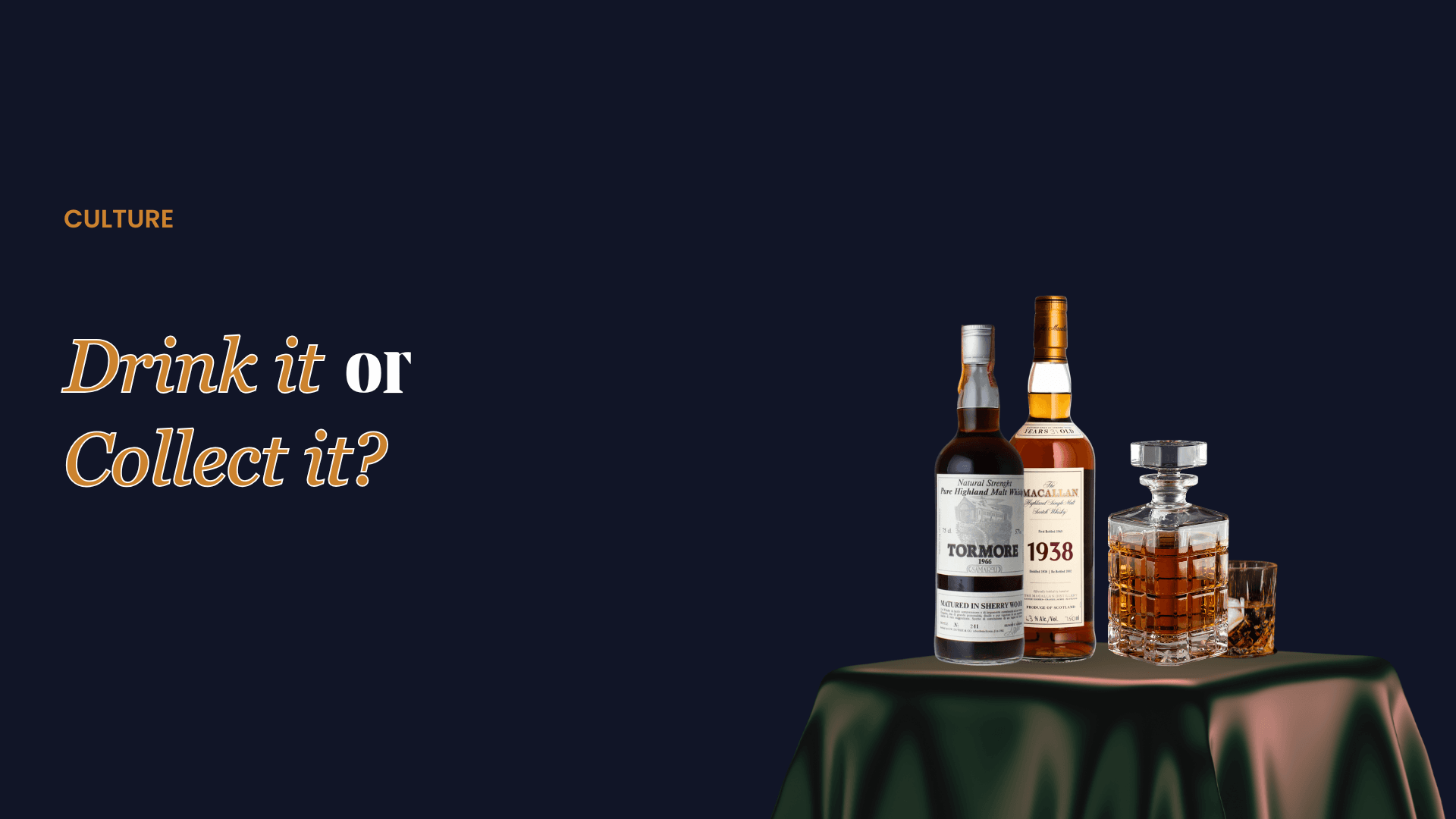
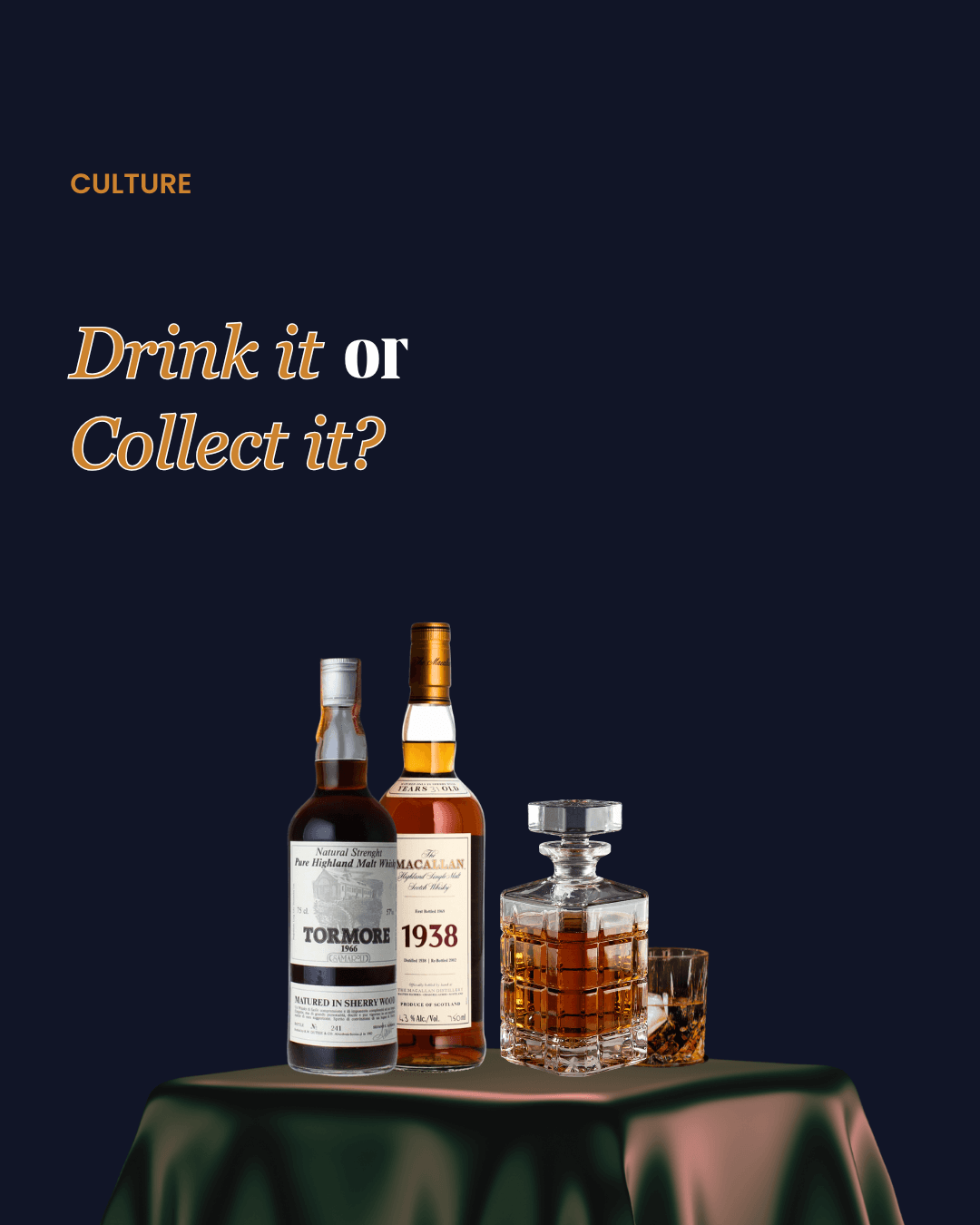
"A bottle doesn't mean anything until you open it. It's just glass and liquid until it becomes part of a story."
This sentiment, shared by a prominent whiskey collector in a recent Sotheby's interview, captures whiskey's central paradox: bottles appreciate when you don't open them, but their entire purpose is to be drunk.
In January 2026, Sotheby's Great American Whiskey Collection auction proved the investment side of this equation decisively. A 1982 Old Rip Van Winkle 20 Year Old sold for $162,500 (well above its $100,000-125,000 estimate). A 1951 Very Very Old Fitzgerald 12 Year hammered at $50,000 (estimate: $40,000-50,000). A 1993 Willett "Bigfoote" 23 Year brought $37,500. The entire collection totaled $2.5 million.
Bottles passed their estimates. Bidders competed aggressively. The auction demonstrated unambiguously that rare American whiskey commands serious collector prices and holds value as an alternative asset.
The drink-or-collect debate frames whiskey as a binary choice. You're either an investor treating bottles as assets, or an enthusiast drinking everything you buy. One camp hoards. The other consumes. And the two perspectives talk past each other endlessly.
The truth is more interesting: the best collectors do both. And they're strategic about which bottles serve which purpose.
The Psychology of the Unopened Bottle
Aaron Goldfarb, author of Dusty Booze, has a line that every collector recognizes: "The best tasting whiskey in the world is the expensive bottle you've never opened."
The statement isn't cynical. It's observational. An unopened bottle exists in a state of pure possibility. You imagine it tasting perfect. The moment you cork it, reality intrudes. Maybe it's transcendent. Maybe it's disappointing. Maybe you're not in the right mood. Maybe the occasion doesn't match the build-up.
And if the bottle has appreciated significantly, the psychological weight compounds. Goldfarb describes buying bottles for $500 that climbed to $10,000. "All of a sudden, okay, now it's worth $1,000. Well, all right, maybe I'm gonna just sit on this for a while and see what happens."
Trey Zoeller, founder of Jefferson's Bourbon, understands this hesitation. He's saved bottles for years, but he also inherited his father Chet's extensive pre-prohibition whiskey library after his passing. That experience changed how he thinks about preservation.
"You build it up in your mind," Zoeller says. "You imagine what it's going to taste like, what the moment will be. And then you're standing there with the cork in your hand thinking, 'Was this the right time? Should I have waited?'"
He regrets not opening a Jefferson's Presidential Select 25 Year with his father before he passed. The experience made him open bottles more readily now. He's planning to crack one with his twins on their upcoming 21st birthdays.
The unopened bottle paradox creates analysis paralysis. Collectors wait for the perfect moment that never arrives because no occasion feels significant enough to justify opening a $10,000 bottle. The wait becomes indefinite. The bottle becomes a totem of deferred experience.
When Collecting Becomes Commodification
The whiskey market's 2016-2023 boom intensified this dynamic. Auction prices climbed aggressively. Bottles that sold for $50 at retail commanded $500 on secondary markets. Single barrels from closed distilleries like Port Ellen and Brora delivered double-digit annual returns, outpacing equities in some years.
The financialization was real. Sotheby's now runs regular whiskey auctions. Christie's operates a full lending desk that advances money against collections. Specialty platforms like BAXUS and Vinovest treat full bottles as tradable stocks.
Felipe Schrieberg, a whisky writer and Keeper of the Quaich, argues this shift transformed how people relate to bottles. "Because whisky has been positioned as a luxury object, it has now been transformed by some into an 'alternative asset class,' where bottles and casks can be traded for fun and profit. That marks a significant shift from whisky as a drink to whisky as a commodity."
When bottles become assets first and whiskey second, the drink-or-collect question tilts heavily toward collecting. Opening a bottle that's appreciating 15% annually feels like burning money. The logic is purely financial.
But that logic misses something essential about why people collect whiskey in the first place. Nobody collects stock certificates for the aesthetic pleasure or because they want to share them with friends at meaningful moments. Whiskey isn't just an investment vehicle. It's a social object. A catalyst for experience. A medium for memory.
Walker puts it directly: "You get to give them that gift. The gift of a pour that becomes a story, something people carry with them long after the bottle is gone."
The Both/And Philosophy: Collecting With Purpose
The drink-or-collect binary assumes collectors can only choose one path. But the most thoughtful collectors segment their collections strategically.
Investment bottles: Sealed, stored properly, tracked for appreciation. These are typically closed distilleries, legendary single barrels, or pre-prohibition bottlings with established auction track records. You're not opening these unless something extraordinary happens or the market shifts dramatically.
Experience bottles: High-quality pours you actually drink, shared at events, tastings, or meaningful personal moments. These might be rare, but they're not irreplaceable. The point is enjoyment and shared experience.
Daily drinkers: Good whiskey that doesn't require ceremony. These bottles keep your palate sharp and provide baseline comparison when you do open something special.
This segmentation solves the paradox. You can hold a 1960s Stitzel-Weller Pappy as an appreciating asset while regularly opening excellent bourbon from current distilleries. You can preserve a bottle your grandfather gave you while sharing other special bottles with friends. You can treat whiskey as both investment and experience without cognitive dissonance.
The key is intentionality. Know which bottles serve which purpose, and don't confuse the categories.
What Dram Enables: Fractional Ownership Meets Shared Experience
The traditional collection model creates natural tension. To build a meaningful collection requires significant capital. A single pre-prohibition bottle can cost $40,000. Building a diverse collection of investment-grade bottles requires six or seven figures.
And once you've invested that capital, opening bottles feels financially irrational. You've locked money into appreciating assets. Consuming them destroys value.
This is where fractional ownership changes the equation.
Dram enables collectors to own shares in investment-grade whiskey without requiring full bottle purchases. Instead of buying a $28,500 Bowmore 1965 outright, you can own fractional shares while the bottle appreciates in secure, climate-controlled storage. You're an actual owner with proportional rights to appreciation, thus not renting access, but holding equity.
But here's what makes the model different: Dram also hosts private tasting events where members experience exceptional whiskey from bottles specifically acquired for shared consumption.
The structure is both/and rather than either/or:
Own shares in bottles that appreciate (via fractional ownership in Reg CF/Reg A+ offerings)
Become a fractional owner of rare bottles and benefit proportionally from price appreciation. No full-bottle capital requirement. No storage logistics. Real ownership with real upside. These bottles remain sealed and professionally stored.
Drink bottles worth experiencing (via private tastings and member events)
Access pours from exceptional bottles in curated settings with other collectors. These bottles are specifically acquired for opening, so there's no financial loss from consumption. You're not destroying your investment, you're experiencing bottles designated for that purpose.
The model separates investment from experience, then provides both. You're not choosing between financial return and shared enjoyment. You're accessing both through different mechanisms.
The Social Dimension: Why Whiskey Demands Sharing
Collectors often describe the transformative power of opening exceptional bottles in the right context. A 1920s pour shared with friends can shift an evening's entire tenor. Conversations deepen. Memories surface. The whiskey becomes a catalyst for connection that transcends its monetary value.
This is what unopened bottles can't provide. A $50,000 bottle sitting on a shelf generates no memories. No stories. No shared experience. It appreciates financially but delivers nothing experientially.
The best collectors understand this distinction. They preserve bottles that should be preserved, but they also create moments around bottles worth opening. And critically, they don't conflate the two categories.
Some bottles carry relational value that transcends market price. A dusty pour from a grandfather's collection. A bottle given by a mentor with instructions to "open it at the right moment." These aren't financial assets. They're vessels for meaning that only materializes when shared.
Noah Rothbaum, author of The Whiskey Bible, frames rare bottles as "liquid history." In 2026, only a handful of people will ever taste whiskey from the pre-prohibition era or from closed distilleries like Stitzel-Weller. These pours connect drinkers to moments in time that can't be recreated.
But that connection only happens when bottles get opened. Sealed, they're historical artifacts. Opened in the right context, they become experiential time machines.
Market Correction Creates New Opportunities
The 2025-2026 whiskey market correction has created space for a more balanced approach. Auction volumes contracted 18% year-over-year in 2025. High-end releases that once flew off shelves now move slower. Buyers have become more selective, more price-conscious, more skeptical of hype.
This environment favors collectors who actually drink whiskey rather than those treating it purely as speculation. Prices have moderated. Age statements are returning to core range products. Distilleries are competing on quality rather than artificial scarcity.
It's a buyer's market for consumption-focused collectors, and a reminder that bottles primarily meant to be drunk probably should be.
The investment-grade bottles remain. Closed distilleries, pre-prohibition bottlings, legendary single barrels - these will always command premium prices because supply is genuinely fixed. But the speculative frenzy around standard releases has cooled.
This creates opportunity for Dram's model. Fractional ownership works best with bottles that have clear investment thesis—documented auction history, structural scarcity, established collector demand. The current market separates signal from noise, making it easier to identify which bottles genuinely merit investment treatment.
The Answer: Strategic Segmentation
The drink-or-collect question shouldn't require choosing. Smart collectors segment their approach:
Invest in bottles with proven appreciation trajectories. Closed distilleries. Pre-prohibition. Legendary single barrels. Bottles with auction track records and structural scarcity. These stay sealed, properly stored, and treated as appreciating assets.
Experience bottles worth sharing. High-quality contemporary releases. Special editions from active distilleries. Excellent bourbon that's rare but not irreplaceable. These get opened at tastings, events, meaningful moments.
Develop your palate with regular pours. Good daily whiskey keeps your taste calibrated and provides comparison points when you do try something exceptional.
Dram enables this segmentation by blending investment and experience. Fractional ownership provides exposure to appreciating bottles without requiring full purchase. Private tastings provide access to exceptional pours without destroying personal investment.
You're not burning a $10,000 asset when you drink great whiskey at a Dram event. You're experiencing bottles specifically acquired for that purpose. The investment bottles remain sealed and appreciating in storage.
Walker's collection sold for $2.5 million, but he still opens bottles regularly through Bourbon Lore. The two activities aren't contradictory. They serve different purposes and create different kinds of value.
The best whiskey experiences come from knowing which bottles to preserve, which to share, and which to drink without ceremony. The false choice between drinking and collecting dissolves when you approach each bottle with clear intention about its purpose.
Because at the end of the day, both matter. Some bottles should appreciate behind glass. Others should become stories shared at tables. And the collectors who understand the difference get to enjoy both.
FAQ: Navigating the Drink vs. Collect Dilemma
Should I drink expensive whiskey or keep it sealed for appreciation?
The answer depends on the bottle's purpose. Investment-grade bottles from closed distilleries or with proven auction track records should generally remain sealed. Contemporary releases from active distilleries, even if rare, are often better consumed while producers continue operating. Ask yourself: Is this bottle irreplaceable, or is it just currently hard to find?
How do I know which bottles in my collection to open?
Segment your collection into three categories: investment bottles (closed distilleries, pre-prohibition, established auction records), experience bottles (rare but not irreplaceable, from active distilleries), and daily drinkers. Only open bottles from the latter two categories. This lets you enjoy whiskey while preserving genuine investment pieces.
What if a bottle I planned to drink appreciated significantly?
This happens. A bottle bought for $500 that's now worth $5,000 changes the equation. Reassess its category. If it's crossed into investment-grade pricing, consider keeping it sealed and buying a different bottle to drink instead. The emotional attachment to "experiencing it yourself" competes with financial reality, and there's no wrong answer—just different values.
Looking Ahead: Building Community Around Shared Experience
Sotheby's specialist Zev Glesta said something revealing about the Great American Whiskey Collection: "At the end of the day, a bottle only becomes what you decide to do with it."
That decision shouldn't be binary. The best collections contain bottles meant to appreciate and bottles meant to be opened. The best collectors know which is which.
Dram is building infrastructure that enables both. Fractional ownership democratizes access to investment-grade bottles without requiring six-figure outlays. Private tastings create contexts for experiencing exceptional whiskey without destroying personal assets.
The drink-or-collect debate assumes scarcity of experience. If you drink it, you lose the investment. If you invest in it, you lose the experience.
But scarcity isn't absolute. It's structural. And the right structure creates abundance where binary thinking creates only compromise.
Collectors who understand this build portfolios that serve multiple purposes: bottles that appreciate, bottles that get shared, bottles that become stories. The auction results prove collectibility. The best tasting experiences prove why whiskey demands more than preservation.
That's the both/and philosophy. Preserve what should be preserved. Share what should be shared. And build systems that make both possible without forcing the choice.
Because the best whiskey stories don't come from bottles that remain sealed forever. They come from knowing exactly when to break the seal.